









The Evolution of Digital Identity: From Silos to Shareable Credentials
Understanding how digital identity is evolving helps explain why shareable verified credentials represent such a fundamental shift in compliance and client onboarding — particularly for Australian reporting entities preparing for expanded AML/CTF obligations.
The Old Way: Every System is Its Own Silo
In traditional client onboarding, each firm manages its own database of client identity documents and verification records.
This created significant problems as professional services became more complex:
-
Clients repeatedly providing the same identity documents to different advisors
-
High administrative overhead for practice managers
-
Duplicated compliance costs across different service lines
-
Vulnerable databases that became prime targets for data breaches
Every practice area, every partner firm, every service provider maintains separate identity records, with none of them communicating with each other. A client engaging an accountant, lawyer, and financial advisor must verify their identity three separate times — with each firm storing duplicate copies of sensitive documents.
The New Way: Verified Credentials That Move With the Client
A new model has emerged: shareable verified credentials that work just like the payment cards in your digital wallet.
Think about how payments evolved: You no longer carry a physical card for every transaction or provide your card details to every merchant to store. Instead, you control your payment credentials in a secure wallet and present them when needed. The merchant can verify and process the payment without storing your card details.
Identity verification is evolving the same way:
-
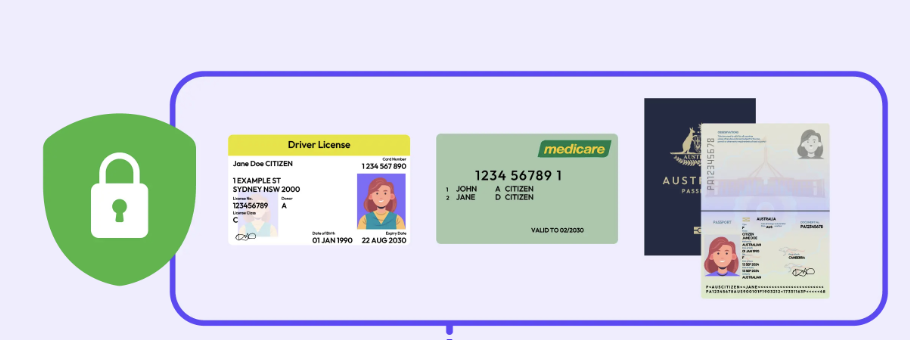
A trusted verifier (such as VerifiMe, using Government Document Verification Service access) conducts comprehensive identity verification and AML/CTF checks, then issues a digitally signed verifiable credential.
-
The client stores that credential in their VerifiMe wallet, accessible from their phone or computer.
-
When engaging a new accountant, lawyer, or real estate agent, they present their verified credential — just like tapping to pay with your phone.
-
The professional can instantly confirm the credential's authenticity without conducting a new verification or storing sensitive identity documents.
This model gives clients control over their verified identity, strengthens privacy, eliminates duplicated verification costs, and makes professional services onboarding faster and more compliant with AUSTRAC requirements.
The Paradigm Shift: From Firm-Centric to Client-Centric Verification
This evolution is architectural, not just technical.
The old firm-centric model: Each professional services organization builds and maintains its own client verification infrastructure and controls what identity data clients must repeatedly provide and where it's stored.
The new client-centric model changes the balance of control:
-
Clients hold and share their own verified credentials instead of firms storing duplicate copies
-
Trust flows cryptographically through digitally signed credentials
-
Privacy and consent are built in — clients control exactly what they share and with whom
-
Professional services firms benefit because they can instantly verify trusted client credentials without conducting duplicated Customer Due Diligence or managing identity data silos
The core principle:
"We move from each firm holding client data and controlling verification processes, to clients holding their verified credentials and deciding where they're shared — while firms meet their AML/CTF obligations more efficiently."
Just as you wouldn't go back to giving every merchant your physical card to store, clients won't go back to providing copies of their passport to every professional advisor once they have verified credentials in their digital wallet.
This approach is particularly valuable as Australian professional services prepare for AUSTRAC Tranche 2 reforms in July 2026, when accountants, lawyers, and real estate agents become reporting entities with full Customer Due Diligence obligations.

Tranche 2 for accountants: two identity regimes, one client relationship
2 May 2026
Privacy Is Now Part of Your AML/CTF Obligations — What the OAIC's Updated Guidance Means for Your Business
30 March 2026

Understanding AUSTRAC's Starter Kits: A Step-by-Step Guide for Accountants and Lawyers
9 February 2026
The Tranche 2 compliance paradox: What you must know before accessing AUSTRAC's starter kits
30 January 2026


Ready to meet compliance requirements with VerifiMe®?